

Overview
Bagworms are a common pest on arborvitae throughout 5401 North and can cause serious damage if they are not addressed early. Although they are often called “worms,” bagworms are actually caterpillars that live inside small protective bags made from silk and pieces of the plant they are feeding on.
Arborvitae are especially vulnerable because bagworms blend in with the foliage and may go unnoticed until the plant begins turning brown. Once arborvitae foliage is heavily damaged or stripped, it may not fully recover, especially on older interior branches.
Why Arborvitae Are Commonly Affected
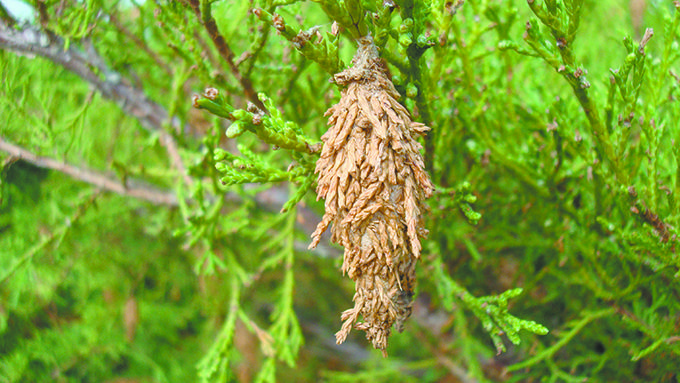
Bagworms often prefer evergreen plants, and arborvitae are one of their common hosts. The bags can look like small cones, seed pods, or dried plant material, making them easy to miss.
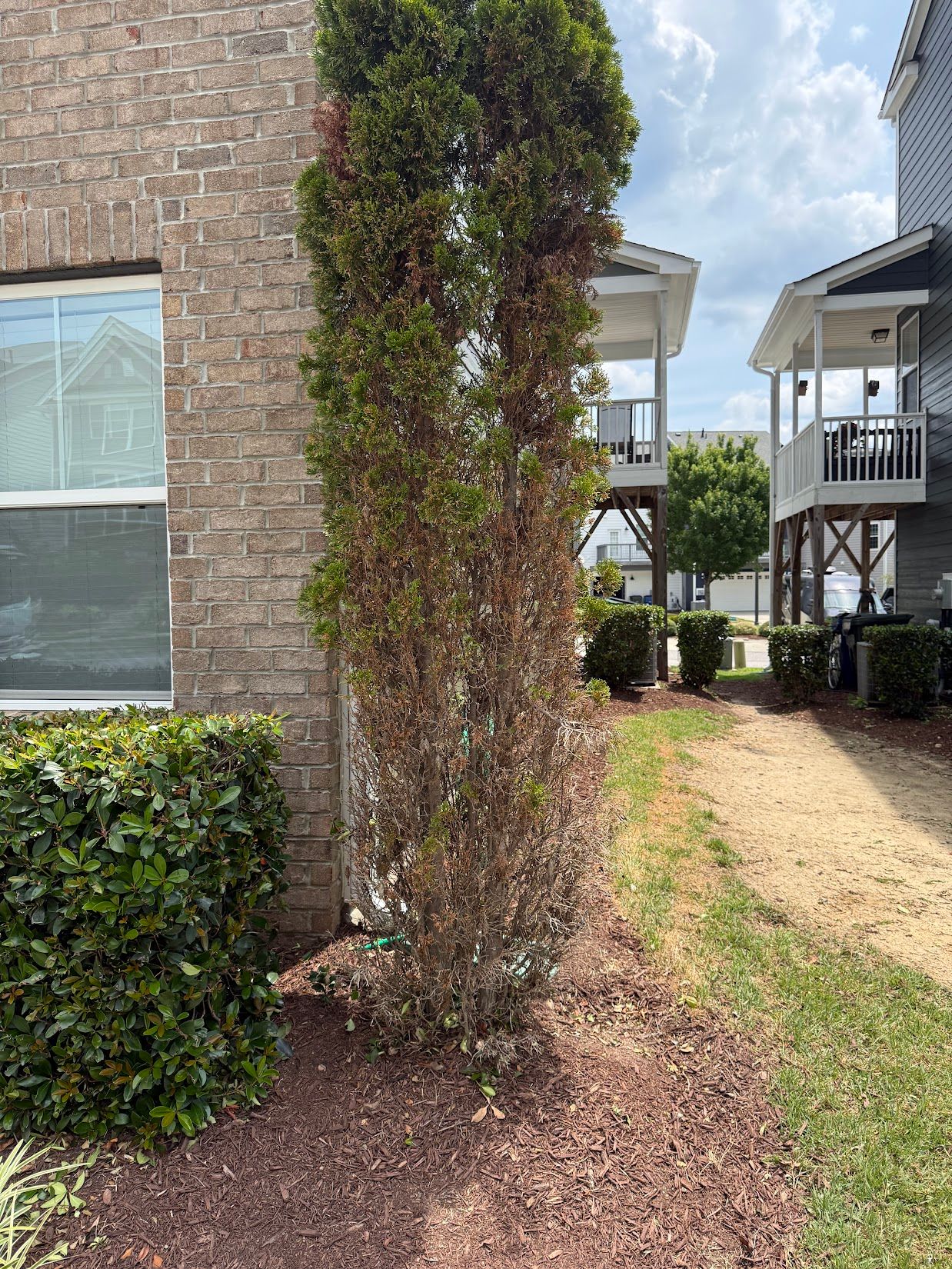
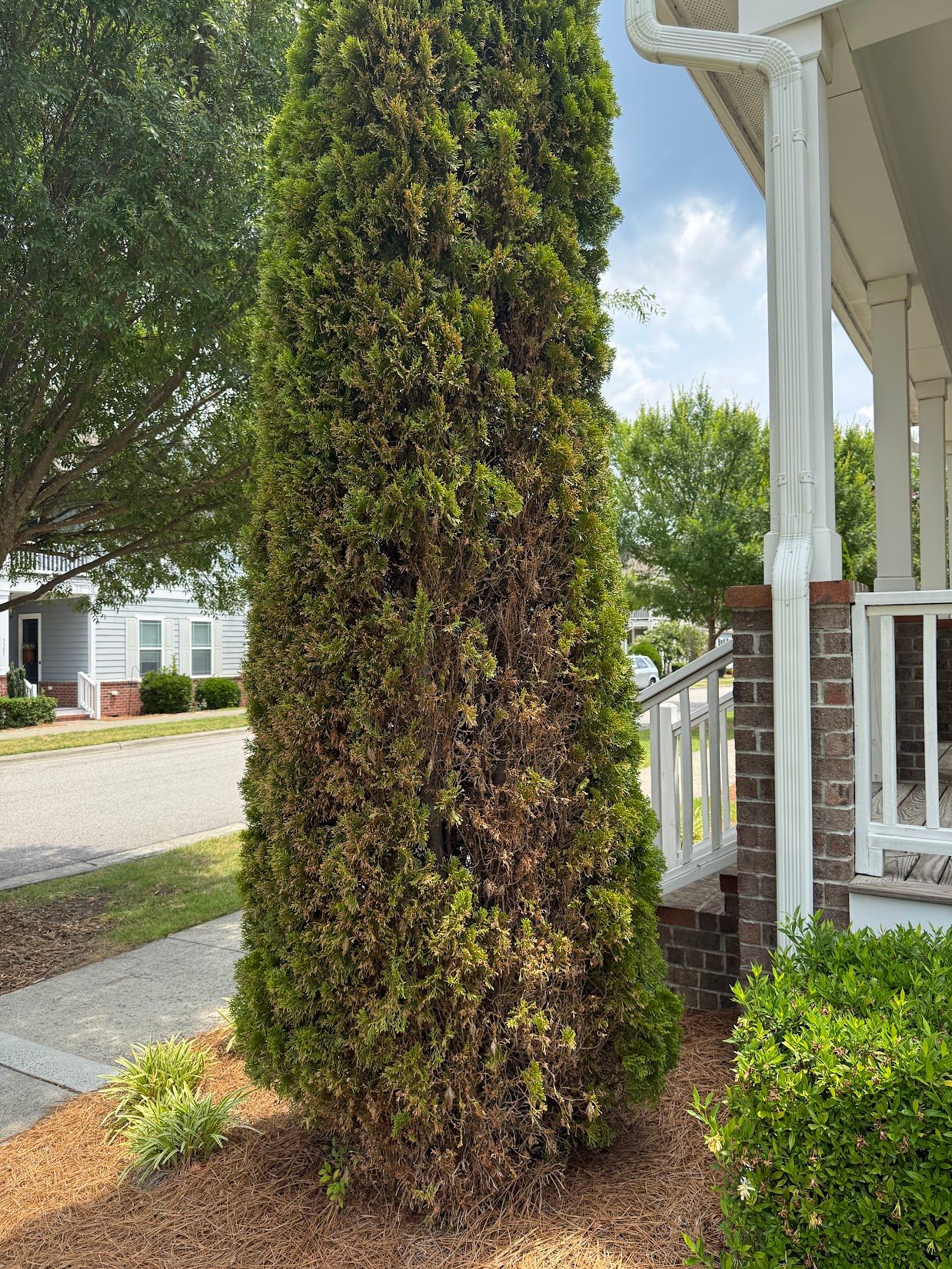
A light infestation may only affect one section of the plant. A heavy infestation can cause large brown areas, thinning, bare branches, or death of the shrub.
What to Look For
Homeowners should inspect arborvitae closely for:
Small hanging bags
Look for small, brown or gray, cone-shaped bags attached to the branches or foliage. These bags may be covered with pieces of arborvitae foliage, which helps them blend into the plant.
Browning or thinning foliage
Bagworms feed on the foliage. Damage may appear as brown patches, thinning sections, or bare areas.
Bags that appear to grow during the season
As the caterpillar feeds, it carries the bag with it. The bag becomes larger as the caterpillar grows.
Damage that spreads from one plant to another
Bagworms may start on one arborvitae and then spread to nearby shrubs, especially when plants are close together in a hedge or screen.
When to Inspect
Bagworms are easiest to manage when they are found early.
Time of Year |
What to Do |
|---|---|
Fall through early spring |
Inspect arborvitae for old bags and remove them by hand before eggs hatch. |
Late May through June |
Watch for small active bagworms and early feeding damage. This is usually the best time for treatment. |
Summer |
Look for larger bags and visible browning. Treatment becomes less effective as bagworms mature. |
Late summer through fall |
Remove visible bags to reduce the number of eggs that may hatch the following year. |
How to Confirm Bagworms
Reisdents may have bagworms if they see:
Small cone-like bags hanging from arborvitae branches
Bags that look like dried foliage or small pinecones
Browning or thinning areas on the plant
Multiple bags on the same shrub or nearby arborvitae
Damage that appears to worsen during the growing season
If you are unsure whether the issue is bagworms, drought stress, disease, or another landscape problem, homeowners may contact landscaping@5401north.net for a consult or additional information.
How to Address Bagworms
1. Remove Bags by Hand When Possible
For small arborvitae or light infestations, hand removal is often the simplest and most effective option.
Remove visible bags by hand or with pruners. Place them in a sealed trash bag or a bucket of soapy water. Do not drop the bags on the ground or place them in yard waste or compost, because eggs or caterpillars may survive.
Hand removal is especially useful in fall, winter, and early spring before eggs hatch.
2. Treat Early in the Season
Spray treatments work best when bagworms are young and actively feeding, typically in late May or June.
Common treatment options for young bagworms include products containing Bacillus thuringiensis kurstaki, often called Bt. These products must be eaten by the caterpillars to work, so the arborvitae foliage needs good coverage. Always read and follow the product label.
Treatments are much less effective once the bagworms are large and enclosed in mature bags. The associate discourages the use of broad-spectrum insecticides that are harmful to pollinators that are actively visiting nearby flowering plants.
3. Prune Dead or Heavily Damaged Areas Carefully
If parts of the arborvitae are brown, bare, or dead, pruning may be needed. However, arborvitae do not always regrow well from old bare wood. Avoid aggressive pruning unless you are sure the plant can recover.
If the damage is significant, a landscape professional can help determine whether pruning, treatment, or replacement is the best option.
4. Monitor Nearby Arborvitae
If one arborvitae has bagworms, nearby arborvitae should also be inspected. Bagworms can spread through a row or hedge if they are not addressed.
When to Contact Us
Homeowners may contact landscaping@5401north.net if they:
Are unsure whether they have bagworms
Need help identifying damage on arborvitae
Would like a consult before treating or pruning
Notice bagworms on common-area landscaping
Have questions about treatment timing or next steps
Additional Learning Resource
For a more detailed explanation of evergreen bagworms, their life cycle, and behavior, homeowners may watch this video:
Evergreen Bagworm: Biology and Behavior
https://youtu.be/v6PS6wwZAdQ?is=m3Tvr3kzz7GyCNBi